Step into the ring with one of Capcom’s most iconic giants! In this blog post, we explore 33 fascinating facts about Hugo Andore, the towering wrestler from Final Fight and Street Fighter. From his origins as a Mad Gear brute to his evolution into a fan-favorite grappler, discover Hugo’s hidden backstory, gameplay mechanics, inspirations from André the Giant, and his unforgettable partnership with Poison. Whether you’re a longtime Capcom fan or new to the series, these facts will give you a whole new appreciation for the gentle giant of Metro City.
Hugo Andore Facts
1- Hugo Andore made his first appearance not as a hero or even a named character, but as a towering gang enemy in the 1989 arcade beat ’em up Final Fight. Originally just “Andore,” he was a recurring grappler enemy based on the real-life wrestler André the Giant — his name, size, and even moves were direct homages.
2- Standing at an imposing 7 feet 10 inches (240 cm), Hugo was the tallest human character in Street Fighter for years — until Abigail joined in Street Fighter V, breaking his record. Hugo still remains one of the bulkiest and most intimidating.
3- He likes Poison, potatoes, tag teaming, hot dogs, Chinese food, and his mother.
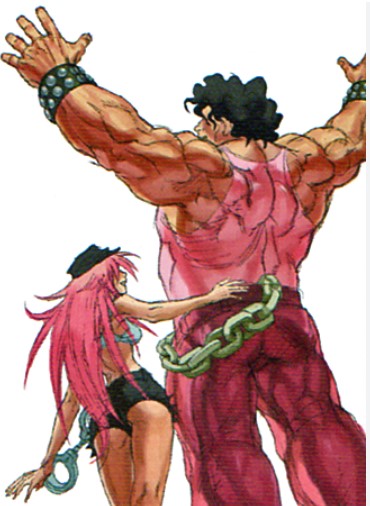
4- His mother inspired him to “grow like a potato” in childhood.
5- After the fall of Mad Gear, he teamed up with Poison to prove himself in international fighting and assert himself as the number one wrestler.
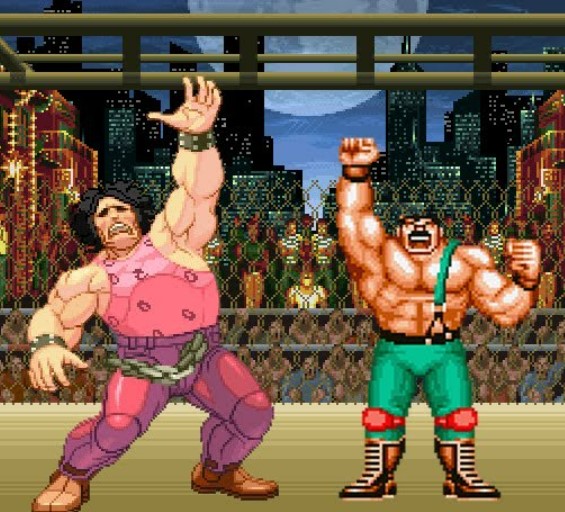
6- Mike Haggar “humiliated him” in the original Final Fight, which greatly angered Hugo.
7- He was hit by Ryu’s Shin Shoryuken in Street Fighter III: 3rd Strike but was not knocked out, impressing Ryu.
8- His sheer size makes him incredibly slow and gives him very short jumping range, making him vulnerable to zoning.
9- He makes a cameo in the Skyscraper Under Construction stage in Super Street Fighter IV.
10.
Despite his massive power, Hugo’s biggest weakness is his size — he has the largest hitbox in Street Fighter, making him easy to combo or zone out with fireballs. A giant in strength, but a magnet for pressure.
11.
The Andore family is canonically huge — there are several other Andores in Final Fight, including Andore Jr., Sr., U, and even F. These weren’t clones — they’re presented as family members. Hugo is considered the most successful of the bunch.
12.
In some endings and win quotes, Hugo breaks the fourth wall. He refers to the player, asks if the match was entertaining, and wonders how many people are watching — giving him a charming meta-awareness that’s rare in the Street Fighter universe.
13.
Hugo was not initially meant to be a Street Fighter character. Capcom repurposed him for Street Fighter III after fans responded positively to his massive design and wanted to see more of the Final Fight world in the main fighting franchise.
14.
In Ultra Street Fighter IV, Hugo’s victory screen shows him giving a thumbs up with Poison beside him, smiling. This is a nod to their deepening friendship — one of the most enduring partnerships across the Final Fight universe.
15.
Hugo’s intro pose in Street Fighter III — where he steps in, cracks his knuckles, and nods — is based on real pro wrestling entrances. Even his fighting stance mimics André the Giant’s posture, with arms lowered and chest forward.
16.
The famous “Gigas Breaker” was inspired by real pro wrestling moves, but exaggerated to superhero levels. It starts with a bear hug, launches the enemy high, and ends with a seismic body slam — symbolizing Hugo’s raw, explosive power.
17.
Hugo’s Japanese voice actor, Wataru Takagi, also voiced Eikichi Onizuka in Great Teacher Onizuka and Garou in One Punch Man. His booming, yet vulnerable delivery helped humanize Hugo’s giant frame with subtle emotional tones.
18.
Hugo’s English voice lines often repeat phrases like “You are small… aren’t you scared?” These lines showcase his simplistic view of strength and reflect his literal mindset — he sees the world as big vs small, strong vs weak.
19.
Despite being a former Mad Gear gang member, Hugo left the gang because he didn’t believe in crime — he just wanted to wrestle. This unexpected sense of justice is part of his charm and makes him more than just a typical “muscle villain.”
20.
In the Final Fight series, Hugo is always placed as a miniboss or sub-boss, meaning players face him multiple times, each time with increasing difficulty. This design helped cement him as a memorable recurring threat.
21.
Hugo’s ending in Street Fighter III: 3rd Strike is emotional. After forming a tag team and facing the world, he walks away from the limelight, showing that even the strongest seek something more meaningful than just fame or power.
22.
He was one of the few characters to receive a fully animated intro and ending in Street Fighter III, showcasing Capcom’s commitment to building his story and expanding his character beyond just muscles and power.
23.
In fan communities, Hugo is often celebrated as a “gentle giant” — a trope where the strongest character is also the most kind-hearted, even naïve. His innocence and simplicity balance his terrifying size in a very human way.
24.
Hugo’s alternative costumes in Street Fighter IV include references to André the Giant’s real outfits and classic wrestling gear, including leopard print tights and black singlets.
25.
Hugo rarely speaks in long sentences. His dialogue is kept short, almost childlike, to emphasize his simplicity. Poison often speaks for him, or interprets his grunts and nods — highlighting their unique relationship dynamic.
26.
His rival in Street Fighter III is Alex — another wrestling-inspired fighter. Their clash is presented as the modern vs the legend, with Hugo representing old-school wrestling and brute strength, and Alex showcasing agility and rage.
27.
Hugo has become a meme within the community for his awkward size. Some characters literally cannot combo him properly because he breaks the rules of hitboxes. It’s both hilarious and frustrating for players.
28.
Though he’s mostly seen in fighting games, Hugo has also appeared in mobile card games, comics, and cameos in Marvel vs Capcom 3, making him one of the most widely-featured Final Fight characters outside of Cody and Guy.
29.
In Final Fight: Streetwise (2006), a spiritual successor to the original game, the “Andore” name appears again, showing how deeply Hugo’s legacy has embedded itself into the extended Metro City universe.
30.
While Hugo may not speak often, his presence on screen — towering over everyone, crushing opponents with kindness and brute force — makes him one of the most unforgettable characters in Capcom’s fighting game legacy.
31- Hugo is known for his surprisingly innocent and childlike personality. Despite his monstrous size, he’s soft-spoken and even gets flustered easily, especially when his manager Poison scolds him or when he’s nervous about a fight.
32- In Street Fighter X Tekken, Hugo is partnered with Poison, continuing their long association since the Final Fight days. Their tag-team dynamic is both comedic and intense — Poison is the brains and attitude, Hugo the power and heart.
33- Hugo often wrestles not just for sport but with a dream: to become the greatest tag-team wrestler in the world. In Street Fighter III, he tries to recruit other fighters to form a team, asking even Ryu and Alex to join his “Huge Wrestling Army.”
The post 33 Interesting Hugo Andore Facts appeared first on NSF News and Magazine.