Nestled in the Konya Plain of modern-day Turkey lies Çatalhöyük, one of the most significant archaeological sites of the Neolithic era. This site offers an invaluable window into early human society, providing insights into how ancient communities lived, worked, and interacted. Despite its importance, many people remain unaware of the intriguing aspects that make Çatalhöyük a focal point for historians and archaeologists alike.
Our journey into the past begins with an exploration of Çatalhöyük’s unique characteristics, from its architectural innovations to its vibrant cultural practices. In this article, I will share ten fascinating and interesting facts about Çatalhöyük that highlight its significance in understanding human history. By delving into its discoveries and examining its impact on our perception of early societies, we can appreciate why this ancient settlement continues to captivate us today.
To truly grasp the essence of Çatalhöyük, we must first explore its historical context and the unique features that set it apart from other Neolithic sites. Join me as we uncover the remarkable legacy of Çatalhöyük and its enduring influence on our understanding of early human civilization.
The History of Çatalhöyük: An Overview
Çatalhöyük was first inhabited around 7500 BCE and remained a thriving settlement for nearly 2,000 years. It is considered one of the earliest examples of a proto-city, showcasing complex social organization long before the rise of more traditional urban centers. The site’s unique layout and construction reflect the adaptability and ingenuity of its inhabitants in the face of environmental challenges.
Archaeological evidence suggests that Çatalhöyük was home to a population of approximately 5,000 to 8,000 people at its peak. The settlement was characterized by densely packed mud-brick houses built in a honeycomb-like pattern, with no streets or pathways, leading to a cityscape that remains unique in the annals of archaeology. This arrangement provided both security and community cohesion, allowing residents to thrive in a challenging environment.
The site’s discovery in the late 1950s by British archaeologist James Mellaart brought Çatalhöyük to international attention. Since then, ongoing excavations have unearthed a wealth of artifacts and information, shedding light on the daily lives, beliefs, and practices of its inhabitants. Çatalhöyük’s history is a testament to human resilience and creativity, offering a fascinating glimpse into the dawn of civilization.
Unique Architectural Features of Çatalhöyük
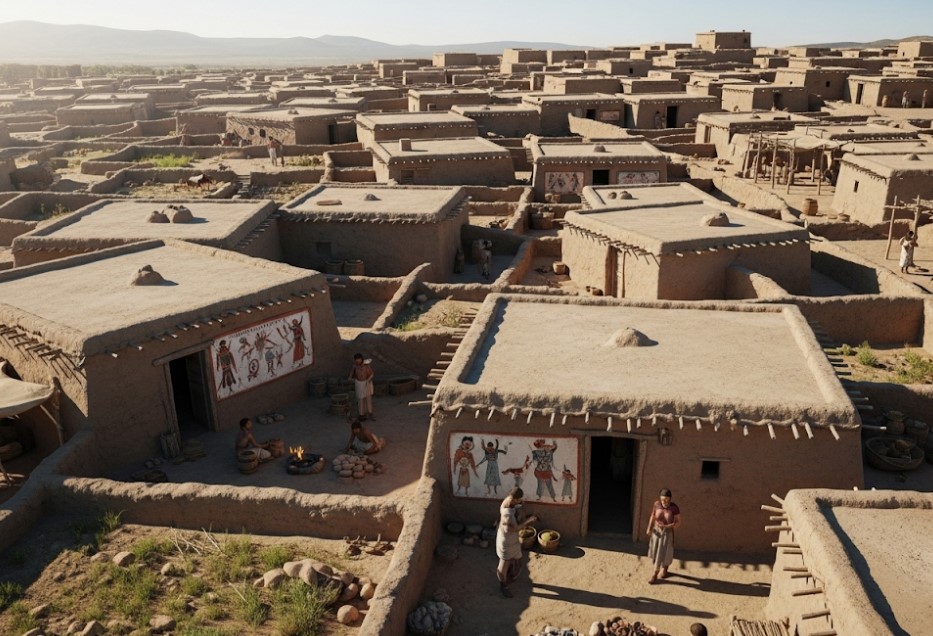
One of the most striking features of Çatalhöyük is its distinctive architectural design. Unlike modern cities, Çatalhöyük lacked streets and alleys. Instead, houses were built adjacent to each other, forming a continuous, interconnected mass. Residents accessed their homes through ladders and openings in the roofs, effectively using the rooftops as communal walkways, creating a unique urban landscape.
The houses themselves were constructed primarily from mud bricks, with wooden beams providing structural support. The interiors were plastered and often elaborately decorated with murals and painted reliefs. These vibrant artworks depicted a range of subjects, including hunting scenes, geometric patterns, and symbolic motifs, reflecting the cultural and spiritual life of the community.
Another fascinating architectural aspect was the use of “platforms” within the homes. These elevated areas served multiple purposes, including as sleeping platforms, storage spaces, and locations for domestic activities. The multifunctional nature of these platforms highlights the ingenuity and resourcefulness of Çatalhöyük’s inhabitants, who maximized their living space to accommodate a range of needs.
One of the Oldest Cities in the World
Çatalhöyük dates back to around 7500 BCE, making it one of the earliest known urban settlements in human history.
No Streets or Paths
The city had no streets. Instead, people entered their homes through rooftop openings, using ladders.
Houses Built Wall-to-Wall
All houses were built closely together, sharing walls. This created a honeycomb-like layout.
No Temples – Religion Was Inside the Home
Unlike other ancient sites, Çatalhöyük had no separate temples. Religious rituals were performed inside the houses.
Burials Inside the Homes
The dead were buried under the floors of the houses, often beneath sleeping platforms.
Rich Wall Art and Murals
Homes were decorated with murals, animal skulls, and symbols, showing early artistic and spiritual life.
Matriarchal or Gender-Equal Society?
Archaeologists found no evidence of hierarchy between men and women. Both seemed to have equal status.
Advanced Farming and Animal Domestication
Çatalhöyük residents practiced agriculture, grew crops like wheat and barley, and domesticated animals, especially sheep and goats.
First Known Maps?
A mural found on a wall may depict the earliest known map, possibly of the Çatalhöyük settlement with a nearby volcano.
UNESCO World Heritage Site
In 2012, Çatalhöyük was declared a UNESCO World Heritage Site, recognizing its importance to human history.
Leopard Symbolism
Leopards were a recurring symbol in Çatalhöyük art. Figurines and wall paintings suggest they may have had a spiritual or protective meaning, though their exact role remains a mystery.
Evidence of Early Medicine
Skeletons at the site show signs of healed injuries and primitive surgery, such as cranial trepanation (drilling a hole in the skull), suggesting an early understanding of medical practices.
Communal Ovens and Shared Spaces
Some areas featured communal ovens outside the homes, indicating cooperative living and shared resources among the people.
Possible Use of Obsidian Mirrors
Obsidian, a volcanic glass found at Çatalhöyük, may have been polished and used as early mirrors — a rare luxury for that era.
Deliberate House Abandonment Rituals
When a home was abandoned, it was often ritually “closed” by sealing the rooftop entrance and sometimes placing offerings, showing spiritual beliefs about space and memory.
Daily Life in Çatalhöyük: What We Can Learn
Life in Çatalhöyük was centered around communal living and cooperation. The absence of streets meant that social interaction and collaboration were integral to daily life. Families shared resources and responsibilities, fostering a strong sense of community and mutual support. This communal lifestyle was essential for survival and prosperity in the Neolithic era.
The diet of Çatalhöyük’s inhabitants was diverse, reflecting their reliance on both agriculture and hunting. Archaeological evidence indicates the cultivation of wheat, barley, and legumes, as well as the domestication of animals such as sheep and goats. Hunting activities supplemented their diet with wild game, including deer and boar. This combination of farming and foraging provided a balanced and varied diet, essential for a healthy community.
Social and spiritual activities played a significant role in Çatalhöyük’s daily life. Ritual practices and ceremonies were conducted within the home, with evidence of shrines and altars found in many residences. These practices underscore the importance of spirituality in shaping the community’s identity and cohesion, offering insights into the values and beliefs that guided their way of life.
Fascinating Burial Practices at Çatalhöyük
Burial practices at Çatalhöyük provide intriguing insights into the community’s beliefs about life and death. The dead were buried beneath the floors of homes, indicating a close connection between the living and the deceased. This practice suggests a belief in an ongoing relationship with ancestors, who were thought to protect and guide the living members of the household.
The graves themselves were often richly adorned with grave goods, including jewelry, tools, and pottery. These items likely held symbolic significance, reflecting the deceased’s status, occupation, or spiritual beliefs. The presence of such offerings highlights the importance placed on honoring the dead and ensuring their safe passage to the afterlife.
Interestingly, some burials at Çatalhöyük include evidence of secondary burial practices, where the bones of the deceased were exhumed, cleaned, and reburied. This ritualistic treatment of the dead underscores the community’s deep-seated spiritual beliefs and their commitment to maintaining a connection with the afterlife. These burial practices offer a fascinating glimpse into the complex belief systems of Çatalhöyük’s inhabitants.
The Art of Çatalhöyük: Murals and Figurines
Art played a central role in the cultural and spiritual life of Çatalhöyük. The walls of many homes were adorned with intricate murals, depicting scenes of hunting, wildlife, and symbolic motifs. These artworks provide valuable insights into the community’s beliefs, values, and the natural world that surrounded them.
In addition to murals, Çatalhöyük is renowned for its collection of figurines, crafted from clay and stone. These small sculptures, often depicting human figures or animals, are believed to have held religious or ceremonial significance. The variety and craftsmanship of these figurines highlight the artistic skills and creativity of the community’s artisans.
The art of Çatalhöyük is not only aesthetically captivating but also serves as a vital source of information about the social and spiritual life of its inhabitants. By studying these artworks, we gain a deeper understanding of the cultural practices and beliefs that defined this ancient society, offering a window into the human experience thousands of years ago.
Çatalhöyük’s Role in Early Agriculture
Çatalhöyük played a crucial role in the development of early agriculture, marking a significant shift from nomadic hunter-gatherer lifestyles to settled farming communities. The inhabitants of Çatalhöyük were among the first to cultivate crops and domesticate animals, laying the foundation for agricultural practices that would shape the future of human civilization.
Evidence of early farming techniques has been uncovered at the site, including the cultivation of cereals such as wheat and barley. The domestication of livestock, including sheep and goats, further supported the community’s agricultural efforts. This combination of crop cultivation and animal husbandry provided a stable and reliable food source, allowing the population to thrive and expand.
The agricultural innovations at Çatalhöyük had far-reaching implications, influencing the development of other Neolithic communities across the region. By pioneering new farming techniques and establishing a model for settled agriculture, Çatalhöyük contributed to the broader transition from nomadic to agrarian societies, shaping the trajectory of human history.
Excavation Discoveries: What Archaeologists Found
The excavation of Çatalhöyük has yielded a treasure trove of artifacts and information, providing a comprehensive picture of life in this ancient settlement. Archaeologists have uncovered a wealth of material, from household items and tools to artworks and architectural features, offering invaluable insights into the daily lives and cultural practices of its inhabitants.
One of the most significant discoveries has been the site’s extensive collection of murals and figurines, which offer a glimpse into the artistic and spiritual life of the community. These artworks, along with the architectural layout of the settlement, provide a unique perspective on the social organization and cultural values of Çatalhöyük’s inhabitants.
In addition to art and architecture, the excavation has revealed evidence of advanced agricultural practices, including the cultivation of crops and domestication of animals. These findings underscore the community’s role as pioneers in the development of early farming techniques, highlighting their contributions to the broader Neolithic agricultural revolution.
Çatalhöyük’s Influence on Modern Understanding of Neolithic Societies
Çatalhöyük has had a profound impact on our understanding of Neolithic societies, challenging previous assumptions about the complexity and sophistication of early human communities. The site’s unique features and discoveries have reshaped our perception of social organization, cultural practices, and technological advancements during this period.
The densely packed layout and communal living arrangements of Çatalhöyük offer a new perspective on urban development, highlighting the adaptability and resourcefulness of its inhabitants. The site’s artistic and spiritual artifacts provide insights into the values and beliefs that shaped the community, offering a deeper understanding of the cultural and religious life of Neolithic societies.
By examining the agricultural practices and technological innovations at Çatalhöyük, we gain a greater appreciation for the ingenuity and resilience of early farmers. The site’s contributions to the development of settled agriculture have had lasting implications, influencing the trajectory of human civilization and shaping the world we live in today.
Conclusion: Why Çatalhöyük Remains Significant Today
As we conclude our exploration of Çatalhöyük, it is clear why this ancient settlement remains significant today. Its unique features and discoveries offer invaluable insights into the lives, beliefs, and practices of early human communities, providing a window into the dawn of civilization.
The lessons learned from Çatalhöyük continue to inform our understanding of human history, challenging assumptions and expanding our knowledge of Neolithic societies. By studying this remarkable site, we gain a deeper appreciation for the adaptability, creativity, and resilience of our ancestors.
As we reflect on the fascinating and interesting facts about Çatalhöyük, I invite you to explore further and engage with the ongoing research and discoveries at this extraordinary site. The story of Çatalhöyük is not only a testament to our shared human heritage but also a source of inspiration and insight for future generations.If you’re as intrigued by Çatalhöyük as I am, consider supporting archaeological research and preservation efforts. By contributing, you can help uncover more of our shared history and ensure that the lessons of Çatalhöyük continue to enlighten and inspire us for years to come. Visit your local museum or archaeological society to learn more about how you can get involved.
The post 20 Fascinating Interesting Facts About Çatalhöyük You Didn’t Know appeared first on NSF News and Magazine.