Lost Roman board game rules have finally been solved thanks to artificial intelligence, ending a mystery that puzzled historians and archaeologists for more than 1,500 years. Researchers have successfully reconstructed how a previously unknown Roman-era board game was played by analyzing wear patterns on an ancient stone slab using AI-powered simulations.
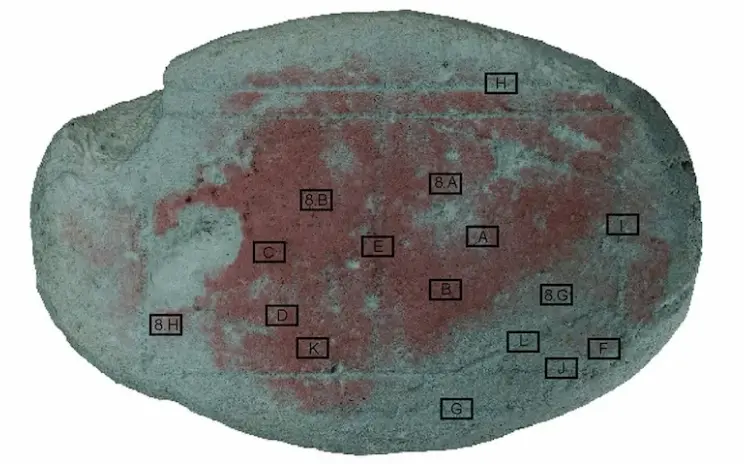
The discovery centers on a flat limestone block found among the ruins of Coriovallum, a Roman settlement located in what is now Heerlen, the Netherlands. The stone, labeled Object 04433, dates back to the early Roman Empire and was likely in use for centuries, possibly as early as the reign of Emperor Augustus.
A Stone Once Misunderstood
For decades, archaeologists debated the purpose of this limestone slab. Some believed it was a decorative architectural element, while others suggested it could have been part of a pavement or building structure. However, new research has revealed convincing evidence that the object was actually a carefully designed game board.
The stone’s surface contains deliberate geometric patterns and grooves that show uneven wear. These markings, researchers argue, are consistent with repeated movement of game pieces rather than natural erosion or construction use.
Why Roman Board Games Rarely Survive
Lost Roman board game rules are extremely difficult to identify because physical game boards rarely survive in the archaeological record. Although board games have existed in nearly every culture since the Bronze Age, most were made from wood, bone, or were drawn directly onto soil or sand—materials that do not endure over time.
This makes Object 04433 especially valuable, as it provides rare physical evidence of recreational life in the Roman world.
Artificial Intelligence Enters Archaeology
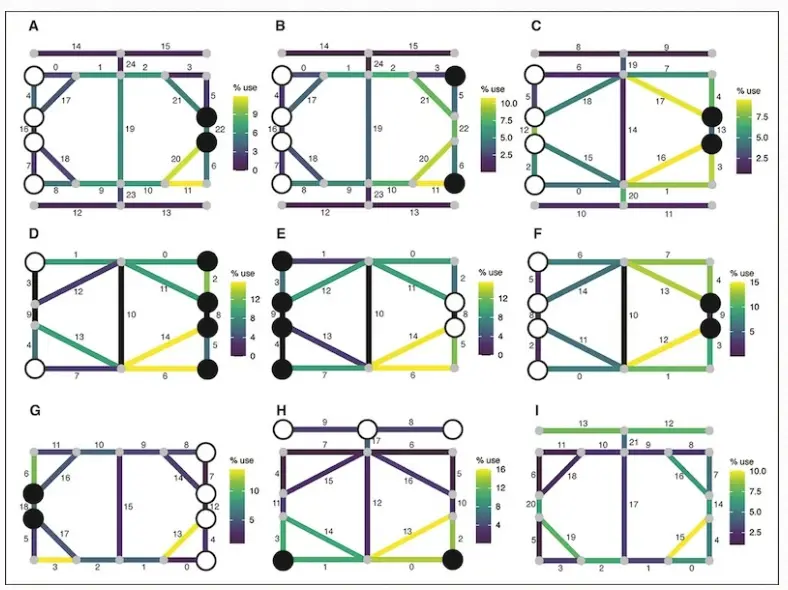
Because the game did not match any known Roman or European board games, researchers turned to an artificial intelligence system called Ludii. The AI was designed to simulate thousands of possible rule sets and test which ones would realistically produce the same wear patterns seen on the stone.
Deep grooves suggested frequently used moves, while faint lines indicated legal but rarely chosen strategies. By reverse-engineering these patterns, the AI narrowed down the most plausible game mechanics.
A Rare “Blocking Game” Identified
The results revealed that the stone was most likely used for a blocking-style board game. In this type of game, players attempt to trap their opponent by limiting movement options and forcing pieces into corners with no escape.
This finding is remarkable because blocking games are extremely rare in ancient Europe and are mostly documented only from the medieval period onward. The implication is that Roman players may have experimented with advanced strategic games far earlier than previously believed.
A Breakthrough Method With Future Potential
This study marks the first known use of artificial intelligence to reconstruct the rules of an ancient board game based solely on physical wear patterns. Researchers believe this method could have much broader applications.
By combining traditional archaeology with AI-based simulations, scientists may now be able to identify other lost games, tools, or cultural practices that do not appear in written texts or artistic depictions.
As lead researcher Dr. Walter Crist from Leiden University explains, current identification methods rely heavily on matching objects to known references. AI offers a new way forward, allowing archaeologists to explore rare or forgotten cultural activities that would otherwise remain invisible.
A Window Into Roman Daily Life
Ultimately, solving the lost Roman board game rules offers more than just entertainment history. It provides a glimpse into how people socialized, competed, and thought strategically in everyday Roman life.
What was once an overlooked stone slab has now become a powerful reminder that even simple leisure activities can leave lasting marks—marks that modern technology is finally able to read.