8,000-Year-Old Ceramic Fragments Unearthed at Arslantepe Höyük in Malatya, Turkey
Malatya, Turkey – Archaeologists have made a remarkable discovery at Arslantepe Höyük, a UNESCO World Heritage site in Eastern Anatolia. During surface excavations, researchers have uncovered ceramic fragments dating back approximately 8,000 years, revealing new insights into one of Anatolia’s oldest urban settlements.
Prof. Dr. Francesca Balossi Restelli, Head of the Arslantepe Excavation Committee, shared with Anadolu Agency that excavation works began this July at the mound, a site known for hosting multiple civilizations and recognized as the birthplace of Anatolia’s first city-state.
Tracing the Past Back to 8,000 Years
Previous research had dated some layers of Arslantepe Höyük to around 4700 BCE, but the recent findings push the site’s history even further back. The ceramic fragments discovered this season suggest that the settlement could date to the 6th millennium BCE, indicating a continuous occupation of nearly 8,000 years.
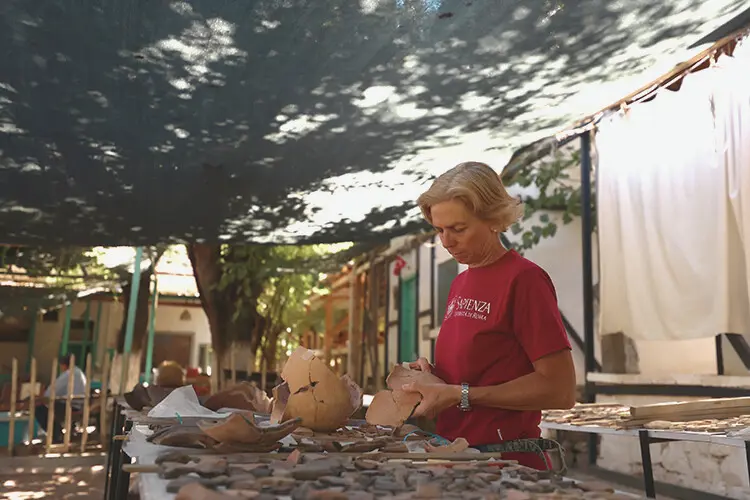
Restelli emphasized the importance of these fragments:
“By examining the mound’s surface, we find ceramic pieces that point to the Late Neolithic Period, known as the Halaf Period. This shows a significant cultural and trade connection with Northern Mesopotamia, including regions of present-day Northern Iraq and Northern Syria. These ceramics reveal that the Late Neolithic communities in Anatolia were part of a broad and interconnected cultural network.”
A Unique Halaf Period Site in Malatya
The excavation team notes that no other mound in the Malatya region has yielded Halaf Period artifacts, highlighting Arslantepe’s unique significance. The primary goal of the current excavations is to uncover the earliest settlement layers, which could reveal even deeper historical insights.
“The most recent layer we have reached dates to 4700 BCE, containing Ubaid culture ceramics. Digging deeper may allow us to fully understand the site’s 8,000-year-old history,” said Restelli.
For more on the Halaf Period and Mesopotamian civilizations, you can visit this detailed overview.
Why This Discovery Matters
- Confirms Arslantepe Höyük as one of Anatolia’s oldest urban settlements.
- Establishes the site’s deep connection to Northern Mesopotamia, illustrating wide-ranging trade and cultural interactions.
- Enhances understanding of Neolithic societal development in Eastern Anatolia.
Arslantepe continues to provide critical insights into early human urbanization, showing how ancient Anatolian communities developed complex societies long before other well-known civilizations in the region.
Stay Updated on Archaeological Discoveries
For more updates on ongoing excavations at Arslantepe Höyük and other archaeological sites in Turkey, visit Anadolu Agency or join their WhatsApp news channel to receive real-time updates.
References & Further Reading:
The post 8,000-Year-Old Ceramic Fragments Discovered at Arslantepe Höyük: Insights into Anatolia’s Ancient Civilizations appeared first on NSF News.