An extraordinary discovery has shed new light on one of the oldest civilizations in human history. A 4,400-year-old Sumerian tablet, housed at the Istanbul Archaeology Museums, has recently been deciphered, revealing a fascinating myth about the storm god Ishkur’s imprisonment in the underworld. This ancient artifact not only enriches our understanding of Sumerian mythology but also offers a glimpse into the spiritual and political life of early Mesopotamian city-states.
The Ancient Tablet and Its Historical Context
The tablet, known by its catalog number Ni 12501, dates back to the Early Dynastic IIIb period (circa 2540–2350 BCE). It was excavated from the ancient city of Nippur, located in what is now southeastern Iraq. Despite being discovered in the 19th century, a full translation and detailed study had eluded scholars due to the tablet’s fragmented and incomplete condition.
Dr. Jana Matuszak’s recent scholarly work, published in the academic journal Iraq, provides the first comprehensive translation and analysis of the tablet’s text. The study illuminates the political and religious environment of Sumer around 2400 BCE, a time when independent city-states were gradually uniting, each with its own patron deity and unique traditions.
Nippur and Its Religious Significance
Nippur was a major religious center in Sumer, revered as the seat of Enlil, the chief god and king of the divine assembly. Each Sumerian city-state had its own protective deity, and Nippur’s guardian was Enlil himself. While political independence varied among the city-states, they shared similar linguistic, administrative, and religious practices. This tablet likely reflects the specific Nippur tradition within the broader Sumerian culture.
The Myth of Ishkur’s Captivity
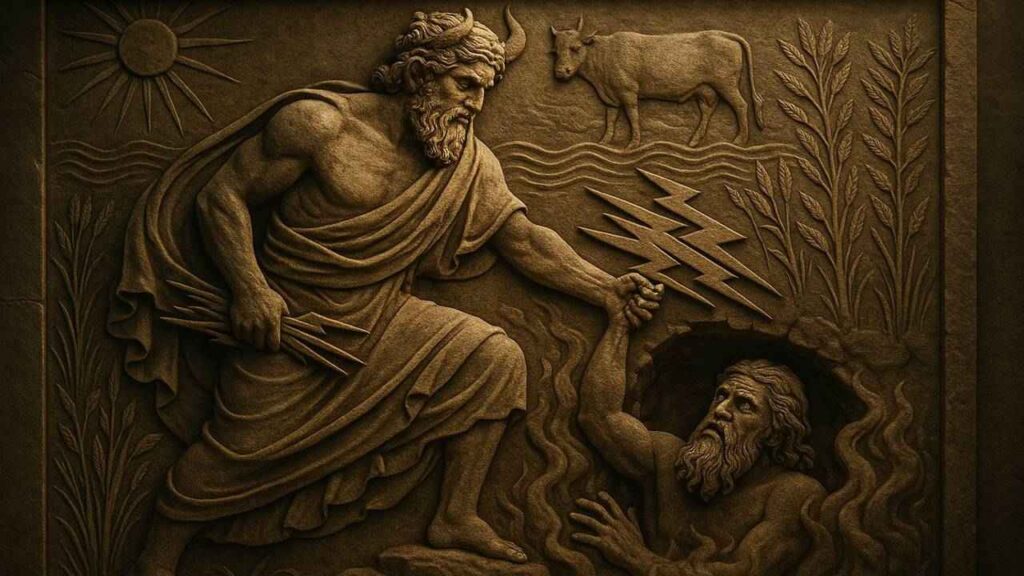
The tablet narrates a captivating myth about Ishkur (also known as Adad in Akkadian mythology), the storm god responsible for rain and fertility. According to the text, Ishkur is captured and held captive in the underworld, disrupting the natural order and agricultural abundance.
Enlil, the divine king, convenes the assembly of gods and tasks the cunning Fox with rescuing Ishkur. The Fox accepts offerings of food and drink but secretly stores them instead of consuming, enabling him to enter the underworld undetected. However, the tablet breaks off at this critical moment, leaving the outcome of the Fox’s mission—and Ishkur’s fate—unknown.
Symbolism and Agricultural Significance
The story is rich with agricultural symbolism. The initial scene depicts rivers shimmering with light and colorful cattle grazing peacefully—a portrait of prosperity. Ishkur’s capture results in chaos, as his children carry away the cattle, implying drought and famine. This aligns with Sumerian beliefs in cyclical seasonal changes where the absence and return of deities symbolized agricultural cycles of scarcity and abundance.
Ishkur’s role as a rain god was especially important for northern and western regions of Mesopotamia, where agriculture depended more on rainfall than on the irrigation canals fed by the Tigris and Euphrates rivers in southern Mesopotamia.
Why This Tablet Matters
Ni 12501 stands out as the only known mythological narrative featuring Ishkur in the lead role. Its discovery offers invaluable insights into Sumerian religious thought, the relationship between gods and natural phenomena, and the intertwining of mythology with the socio-political landscape of ancient Mesopotamia.
The tablet’s preservation in Istanbul’s Archaeology Museums allows scholars and the public alike to connect with a culture that laid foundational aspects of civilization, including writing, governance, and religious practice.
Final Thoughts
The decoding of this 4,400-year-old Sumerian tablet is a remarkable achievement that opens a new window into the spiritual life of early Mesopotamians. The myth of Ishkur’s captivity reminds us how ancient peoples understood and explained the natural world around them through rich storytelling and religious symbolism.
From the powerful role of Enlil as the divine ruler to the Fox’s clever rescue mission, this myth reflects humanity’s timeless fascination with order, chaos, and the hope for renewal.
The post 4,400-Year-Old Sumerian Tablet Deciphered: The Captivity of the Storm God Ishkur appeared first on NSF News and Magazine.