In a discovery that rewrites our understanding of ancient South American civilizations, archaeologists in Peru have unearthed a 4,000-year-old sacred city built by the enigmatic Caral civilization. Hidden for millennia in the rugged terrain between the Andes Mountains and the Amazon Basin, this newly uncovered site — known as Peñico — sheds light on a forgotten era of complex social structures, spiritual rituals, and long-distance trade.
The Discovery of Peñico: A Hidden Gem of the Ancient World
Located just 200 kilometers north of Lima and a mere 12 kilometers from the UNESCO World Heritage Site of Caral-Supe, Peñico sits on a geological terrace at 600 meters above sea level. Nestled parallel to the Supe River and surrounded by peaks that rise up to 1,000 meters, the city’s location was both strategic and sacred.
Peñico is believed to have flourished between 1800 and 1500 BCE, a time contemporary with the Middle Kingdom of Egypt and China’s Shang Dynasty. This temporal overlap illustrates the global synchronicity of early complex societies, each developing intricate knowledge systems in isolation.

Architecture, Ritual, and Musical Symbolism
Of the 18 structures unearthed, the most significant is the Ceremonial Hall of the Pututus (B2) — a quadrangular building believed to have served as the administrative and ideological heart of the city. Adorned with reliefs depicting conch shell instruments known as pututus, the hall is thought to have hosted gatherings, announcements, and rituals to unify and govern the population.
Mauro Ordóñez, lead archaeologist at the site, emphasizes that such symbolism reveals deeply embedded ceremonial practices and a highly organized social hierarchy.
Artifacts found at the site include:
- Figurines of humans and animals made from unbaked clay,
- Necklaces crafted from mollusk shells,
- Semi-precious stones such as rhodochrosite and chrysocolla,
- Stone tools and animal bones indicating trade and ritual use.
Most intriguingly, figurines depicting monkeys and other Amazonian fauna suggest that the city was well aware of — and possibly traded with — Amazonian cultures, further strengthening the theory that Peñico served as a bridge between the highlands and the jungle.

A Continuation of the Caral Legacy
According to archaeologist Marco Machacuay, Peñico represents not a separate entity, but a direct continuation of the Caral tradition — one that adapted to environmental changes and the collapse of the Caral capital.
The economic backbone of Peñico appears to have relied on:
- Irrigation-based agriculture,
- Trade in minerals, particularly hematite, a red pigment highly significant in Andean cosmology.
As a result, the city became a prestigious center in its own right, inheriting the social and economic networks left behind by Caral.
A New Narrative for Pre-Columbian Civilizations
Peñico’s discovery disproves long-held myths about pre-Columbian civilizations being primitive or nomadic. Modern archaeology continues to reveal that societies like Caral and Peñico had:
- Advanced urban planning,
- Stable agricultural systems,
- Knowledge in astronomy, mathematics, and ecology.
As researcher Ruth Shady and her team note, the resilience of Peñico is a testimony to how ancient civilizations responded to environmental change, a lesson that resonates strongly in today’s climate-aware world.
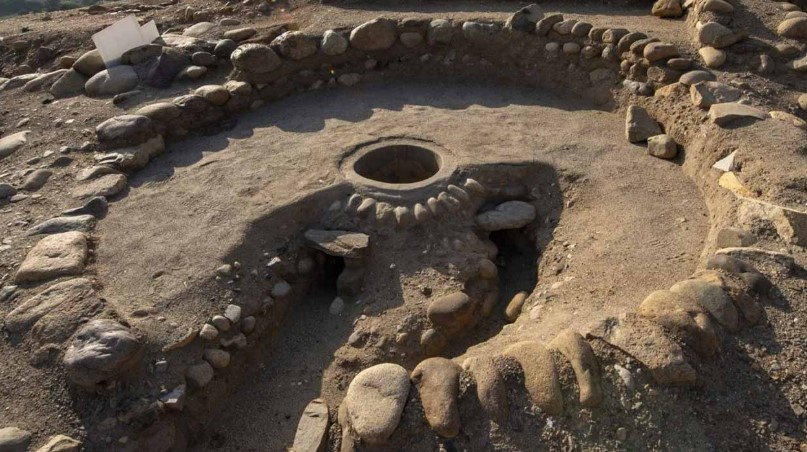
Peñico Raymi: A Cultural Revival
In a symbolic act of reconnection, Peñico was opened to the public on July 12, accompanied by the first annual celebration of Peñico Raymi, a modern Andean festival that pays tribute to ancient traditions.
Now joining the ranks of Machu Picchu and the Nazca Lines, Peñico stands as a new centerpiece of Peru’s archaeological heritage, highlighting a long-standing cultural continuity and the ingenuity of civilizations that thrived thousands of years before the Spanish conquest.
Conclusion: A Forgotten City Reborn
The discovery of Peñico is more than an archaeological milestone — it is a powerful reminder that the ancient Americas were home to sophisticated, organized, and spiritually rich societies.
As more secrets emerge from Peru’s deserts and highlands, our collective understanding of human history continues to shift. Peñico is no longer just a lost city — it is a rediscovered story of resilience, connection, and sacred knowledge.
The post Lost Sacred City Discovered in Peru: A 4,000-Year-Old Civilization Bridging the Andes and the Amazon appeared first on NSF News and Magazine.